Independent research laboratory · Southern California
Rigorous physics, built at lab scale.
Meridian Lab is a small, privately funded laboratory. We design instruments, run careful measurements, and publish the whole method — in nuclear physics first, and in the adjacent problems that need the same rigour.
Collaborators and supporting institutions






01 — What we work on
Three lines of work, one method.
Each line is small enough to be run properly and open enough to be checked by anyone. They share instruments, people and a bias toward measuring things twice.
Nuclear physics
Low-yield sources, moderator design and shielded geometries for experiments that can be run and reproduced by a small team.
- Source and moderator assemblies
- Shielding and dose modelling
- Cross-section measurement campaigns
Detection & instrumentation
Detector modules, readout electronics and calibration procedures built as one system rather than three separately-owned pieces.
- Scintillator and semiconductor arrays
- Digitiser and trigger chains
- Calibration and drift tracking
Computation & open tooling
Simulation, reduction and analysis code released alongside the data it produced, so a result can be re-derived from scratch.
- Transport simulation and surrogates
- Reduction pipelines and data formats
- Open datasets and notebooks
02 — Selected projects
What is on the bench right now.
Project Halo
A compact, moderated neutron source built for reproducible bench-scale experiments.
Project Lantern
A modular scintillator array and readout chain for low-background gamma spectroscopy.
Project Cinder
Target materials and separation chemistry for small-batch isotope work.
Project Tideline
An open transport-simulation toolkit with learned surrogates for fast design sweeps.
03 — How we work
A narrow question, an instrument built for it, and everything written down.
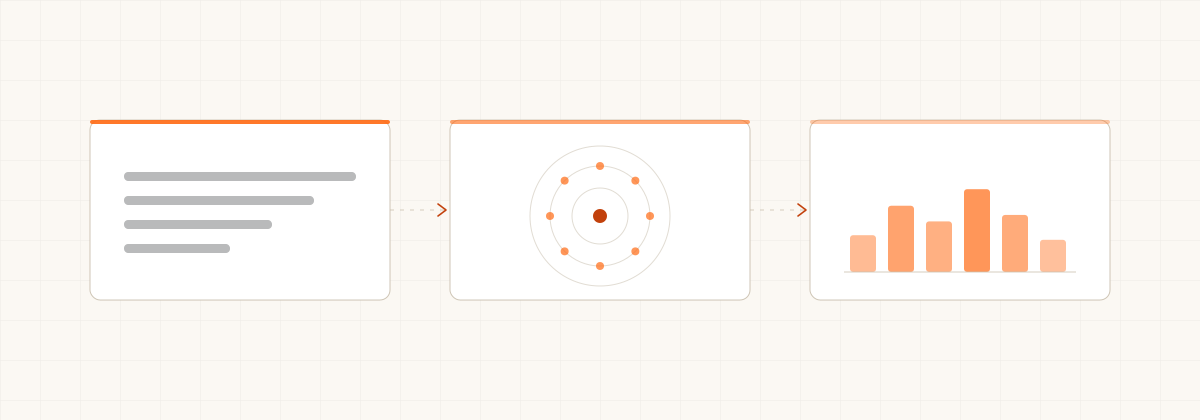
Define the question narrowly
We start from a measurement we can actually make, not a programme we would like to have. The scope is fixed in writing before anything is ordered.
Build the instrument around it
Most of the schedule is hardware. Detector, geometry, shielding and readout are designed together so the systematic budget is understood before first light.
Measure, then measure again
Every campaign includes an independent repeat with a different analyst and, where we can arrange it, a different apparatus.
Publish the whole method
Papers, raw data, reduction code and the parts of the notebook that did not work. A result nobody can reproduce is not finished.
04 — By the numbers
Small on purpose.
Placeholder figures — swap these for the numbers you want to lead with.
05 — From the journal
Notes, essays and explainers — published here first.
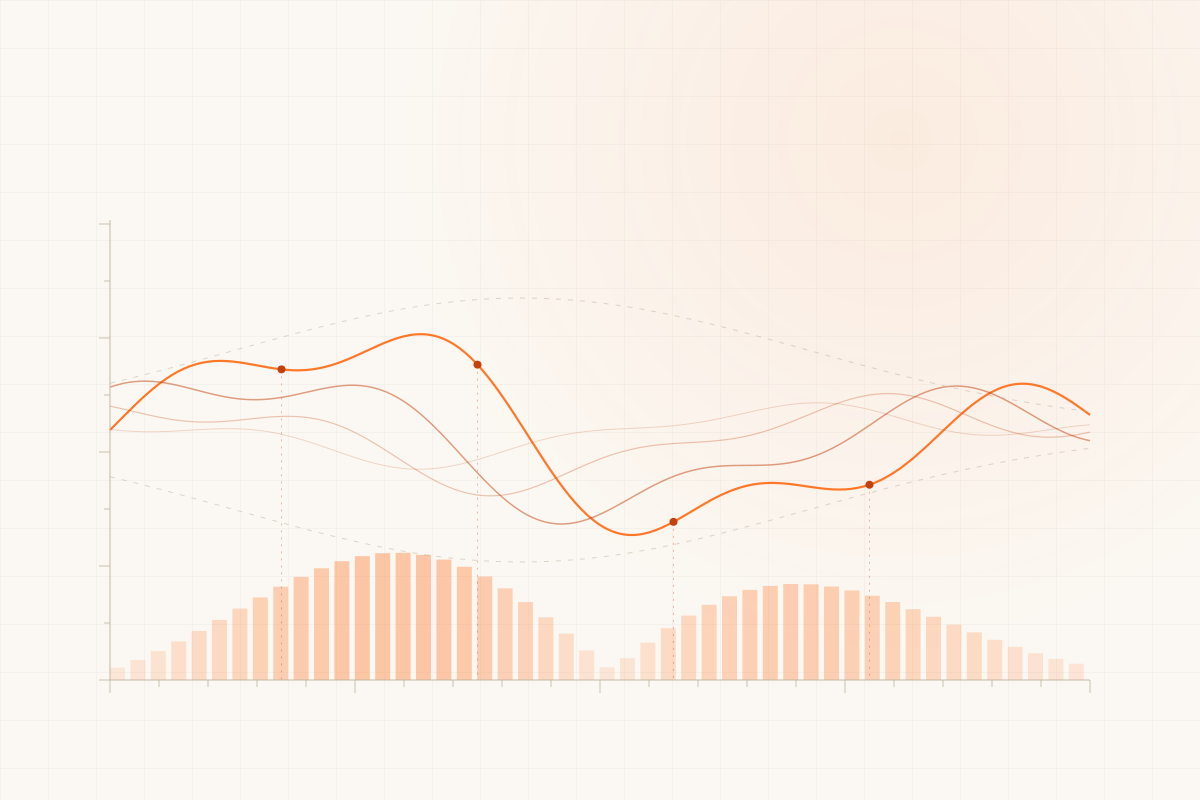
What a detector actually measures
A ground-level walk through the chain that turns an interaction in a crystal into a number on a plot — and the places where that chain quietly lies to you.
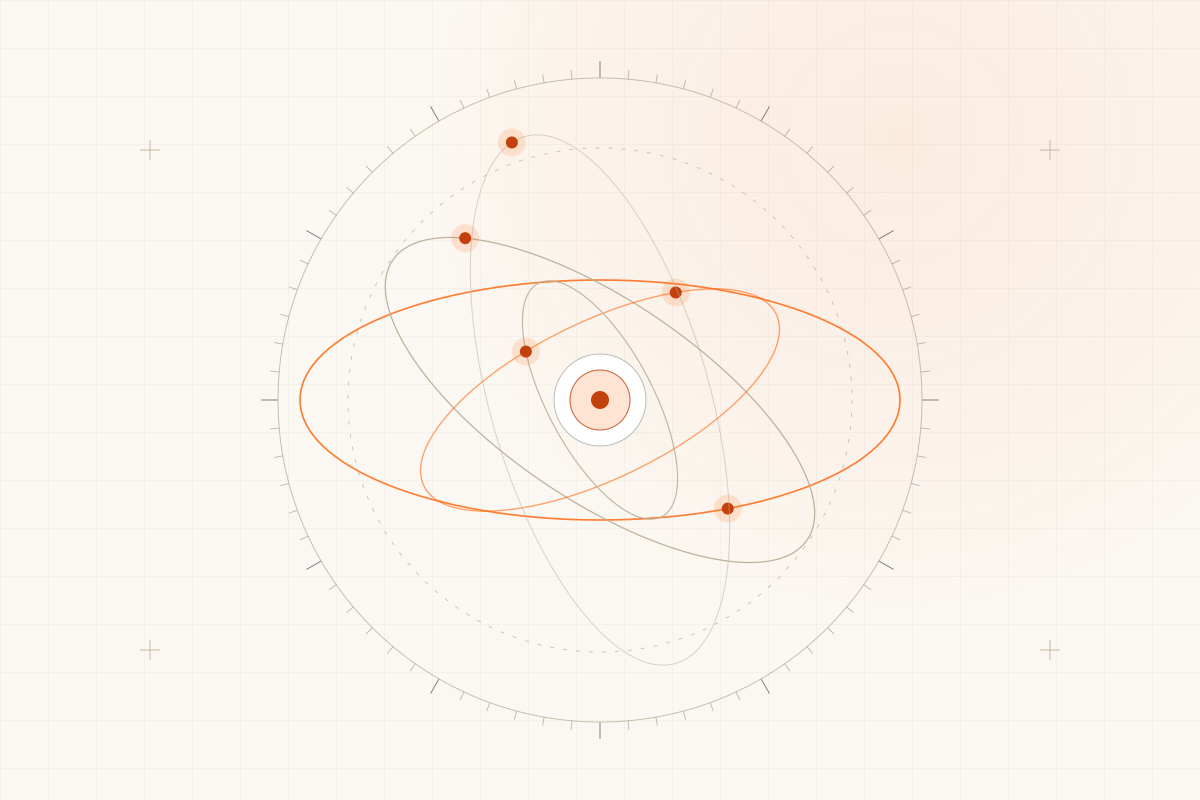
Notes on building a shielded bench
Everything we got wrong the first time we assembled a moderator stack, written down so the next person gets a shorter path.
The case for small laboratories
Why a handful of people with a clear question and good instruments can still move a field, and what that model gives up in exchange.
Work with the lab
Have a problem that needs an instrument built around it?
We take on a small number of collaborations and sponsored projects each year, alongside the work we fund ourselves.